
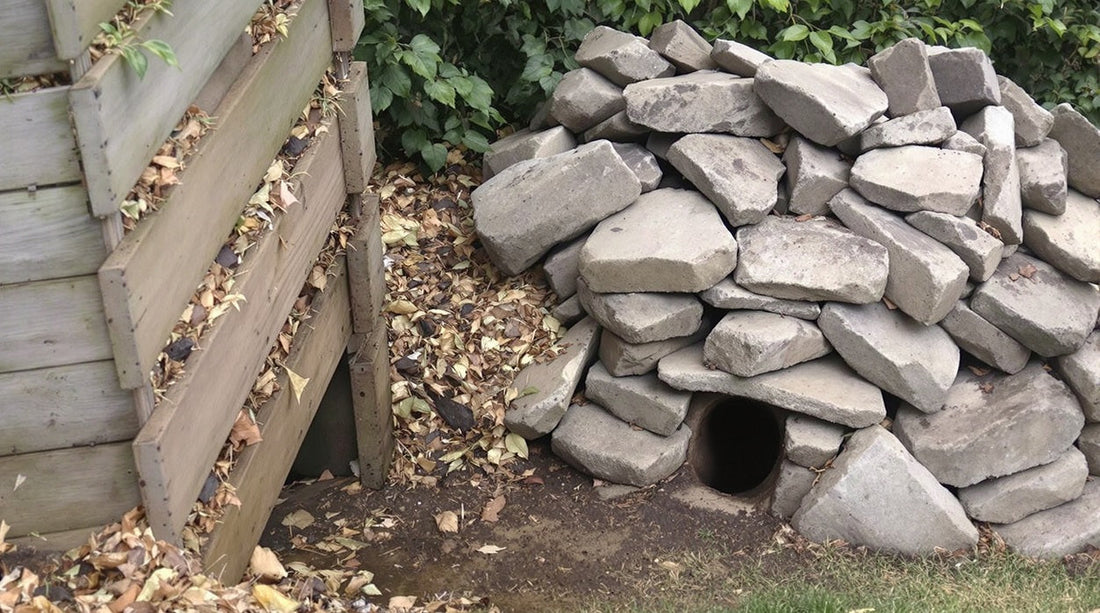
The habitat of rats in the garden
Anyone who owns a garden will sooner or later think about uninvited guests. Rats in particular cause unease – after all, they are adaptable omnivores that can reproduce rapidly. In some forums you’ll find the tip to place the compost on a vole mesh, but that does not always prevent rats from settling in. So what makes the outdoor area so attractive to them? Anyone wondering what helps against rats in the garden will quickly discover that a combination of preventive measures, natural deterrents and physical protection such as a fine-mesh anti-rat grid is the most effective solution.
Rat behaviour and their adaptability
Rats are considered extremely adaptable. Two species are commonly found in Central European gardens: the black rat (Rattus rattus) and the brown rat (Rattus norvegicus). While the black rat, according to Biologie.de, often lives in attics and upper floors, the brown rat prefers damp areas such as gardens, riverbanks or sewers.
- Food: Rats eat fruit, vegetables, grains, compost waste and even pet food – anything that’s available in the garden.
- Water: Without a regular water source they usually do not settle permanently in the garden. However, a garden pond or the water bowl for dogs and cats is already enough.
- Retreat areas: Dense planting, compost heaps, sheds and also cavities under patio slabs provide ideal hiding places.
This makes the garden a real land of milk and honey for rats – provided there is enough cover and disturbance from humans is minimal.
Typical hiding places for rats outdoors
In its hide-and-seek game with humans, the rat shows remarkable ingenuity. Two structures in particular serve as secret rat hotels: compost heaps and slabs of stone.
A sufficiently tall, unattended compost heap standing on loose soil is a true paradise for rats. Here they find food, warmth from decomposition processes and safety from predators. Paving slabs, for example along patios or paths, also provide protection from predators and the weather thanks to hidden cavities.
In addition, little-used garden sheds or densely overgrown shrubs offer extra opportunities to settle in almost unnoticed. Many of these spots are difficult for people to see, which makes monitoring more challenging.
Table comparison: Features of the main rat hiding places in the garden
| Hiding place | Besonderheiten | Advantages for rats |
|---|---|---|
| Compost heap | Loose material, food | Protection, warmth, food |
| Stone slabs | Hollow spaces, difficult to access | Security, darkness |
| Garden sheds | low-traffic, dry | Unnoticed nesting |
| Shrubs/ground cover | dense plant growth | Camouflage, protection |
Roof rats vs. brown rats: differences in the garden
| Property | Black rat | Brown rat |
|---|---|---|
| Place of stay | rarely on the outside | Prefers the garden |
| Building structure | few tunnels | pronounced structures |
| Moisture requirements | low | high |
Signs of rat infestation in the garden
A well‑hidden rat infestation often goes unnoticed for months – yet the animals always leave traces. Anyone who knows what to look for can react in time before a full‑blown rat colony develops.
The identifying features of rat presence
Rat burrows are unmistakable, roughly 6–20 cm holes in the ground that often have several exits. They are typically found at the edges of compost heaps, under slabs or near walls.
Characteristic runways appear as well-trodden paths, often marked with dirt stained by urine, which regularly lead between food sources and the nest. Gnaw marks on plastic bins, wooden beams or vegetable roots are further indicators. Not to forget: small brown droppings and an ammonia-like smell, especially near the nest, reveal the presence of the rodents.
Quote from Gartenexperten.de: “A compost heap that is difficult to access is often the main cause of rat colonies in the garden. Especially in winter, when food is scarce, populations become concentrated in these areas.”
Comparison table: Common signs of rat infestation
| Anzeichen | Beschreibung | Example locations |
|---|---|---|
| Holes in the ground | 6–20 cm, with multiple exits | Compost, slabs, walls |
| Runways / tracks | worn paths, soiling | to and from hiding places |
| Gnaw marks | gnawed containers, roots | Wheelie bins, garden sheds |
| Droppings/urine traces | small brown pellets, smell of ammonia | near the nests |
Comparison table: risk factors side by side
| Risk factor | Why it encourages infestation | Potential protection |
|---|---|---|
| Open compost | Easily accessible, food source | Cover, sieve, transfer |
| Neglected garbage bins | Access to food scraps | Locking systems |
| Dense vegetation | easy to hide from people | regular pruning |
| Stone slabs without foundation | Open cavities | Installation with gravel bed |

Measures for preventing and combating infestations
Once signs have been detected, swift action is required. Most important is the elimination of ideal conditions that attract rats. Those who take consistent preventive measures rarely have to worry about a rat hotspot.
A few years ago, I, Marianne, suddenly noticed small, narrow tunnels under my garden slabs. After doing some research and talking to my neighbor, I installed a fine-mesh grid under the slabs and checked the compost carefully. Since then, I have never had any problems with uninvited guests in the garden again.
Eliminating ideal living conditions
Compost heaps should always be lined with a sturdy mesh (vole mesh or metal mesh) that makes underground access impossible. Food scraps, especially animal products, do not belong on the compost. Garbage cans must have tightly closing lids and be placed away from potential nesting sites.
Stone slabs become a rat housing complex when they are laid on loose sand – proper installation on a bed of crushed stone prevents this. Garden sheds and other outbuildings must be checked for accessible gaps – sealing them is essential!
Comparison table: Prevention methods
| Maßnahme | Effect and goal | Effort |
|---|---|---|
| Cover compost | no food source, no access | low |
| Lay slabs professionally | no cavities under paving slabs | medium |
| Secure trash cans | Reducing food sources | low |
| Pruning bushes | Removal of hiding places | medium |
Recommended control measures and legal aspects
If an infestation occurs, it is important to proceed with particular care. Live traps are animal-friendly, but require regular checking and the proper release of the animals (at least 5 km away, according to BUND recommendations). Snap traps work immediately, but are controversial and not permitted in some municipalities. The use of poisons may only be carried out by professionals in order to minimize the risk of poisoning for children, pets and beneficial organisms.
In cases of severe infestation, there is often a legal obligation to report under municipal regulations – it’s worth checking your local rules! Otherwise, you may face fines.
Comparison table: Control methods with advantages and disadvantages
| Method | Vorteile | Disadvantages |
|---|---|---|
| Live traps | Animal-friendly | Effort, implementation required |
| Snap traps | fast‑acting | animal welfare concerns |
| Poison bait (professional required) | efficient for large quantities | Risk to pets and the environment |
| Professional sealing | effective as a preventive measure | no direct control of the animals |
A watchful eye protects the garden
Rats are survival experts and true master builders when it comes to creating nesting sites in the garden. Compost heaps and untreated cavities under paving slabs in particular quickly become hotspots of their activity. Anyone who recognizes the signs early and takes appropriate action protects not only their own harvest but also the health of people and pets.
Prevention is the best protection: Secure compost, lay stone slabs correctly, close off waste sources, and regularly check dark corners. If an infestation does occur, keep a cool head, adhere to legal regulations, and, if necessary, consult professionals. This way, the garden remains a place of relaxation – without unwanted rat hotels!