
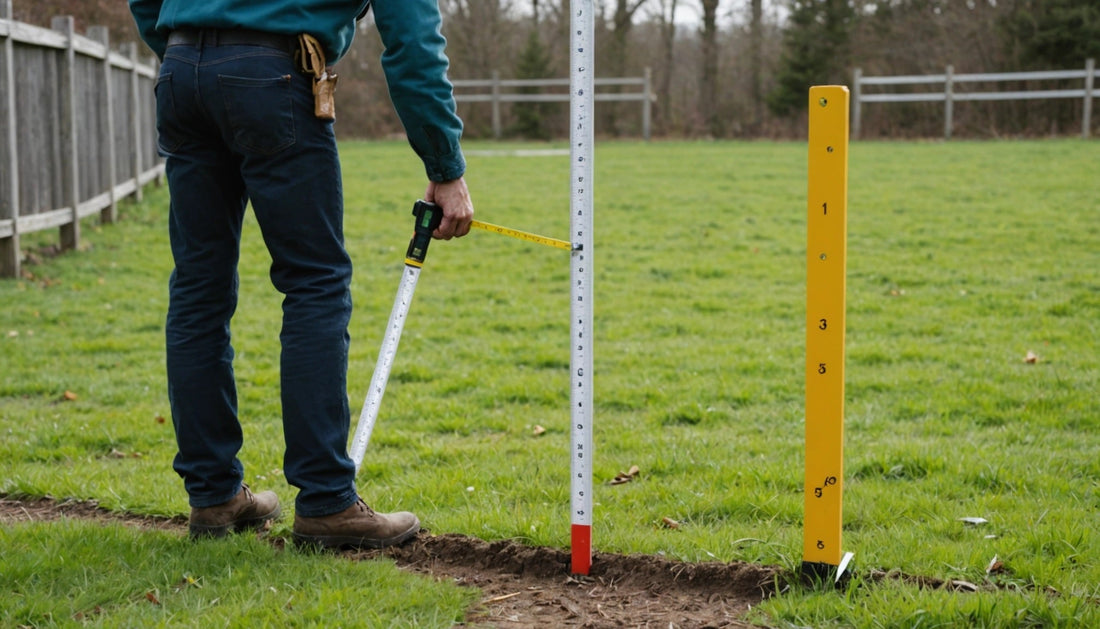
If you own a property and are thinking about building a fence, there are a few important regulations and legal requirements you should keep in mind. In Germany, fence height is regulated not only by state building codes, but also by local development plans. You might be looking for a vole mesh, but also be considering enclosing your property. Here you’ll find everything you need to know about unusual but important regulations.
The legal basis for fence height
The legal framework in Germany
There is no general standard for the maximum height of fences in Germany. Instead, the state building regulations are decisive, and these can vary from one federal state to another. The importance of these regional regulations should not be underestimated, as they can significantly restrict the scope of action for property owners.
Different regulations in the federal states
For example, regulations in Baden-Württemberg typically allow a fence height of up to 1.50 m in urban areas, while in North Rhine-Westphalia (NRW), fences up to 2 m are allowed at property boundaries, as long as they do not serve as privacy screens.
Examples:
- Baden-Württemberg: 1.50 m within built-up areas
- North Rhine-Westphalia: 2 m at the boundary
Exceptions and special regulations
If you are planning a higher fence, you can in some cases apply for a building permit. Here, the development plan of your municipality plays a key role, as it sets out regulations on development and land use.
If the development plan does not contain clear specifications on fences, the principle of neighbourly consideration often applies. This means that a fence must not unreasonably impair the use of neighbouring properties. If there is any uncertainty, it may be advisable to consult a lawyer in advance.
Restrictions due to heritage protection
In certain areas, especially in historic or listed areas, additional restrictions may apply. These can affect the material, color, and design of the fence to preserve the local appearance. Violating these regulations can have severe consequences, including the removal of the fence.
For effective protection and long‑lasting raised beds, it is also worth using a suitable vole mesh for raised beds, which reliably keeps voles away and protects your garden.
| Federal state | Maximum fence height without permit | Features |
|---|---|---|
| North Rhine-Westphalia | 2.00 m | Without privacy function |
| Baden-Württemberg | 1.50 m in built‑up areas | Outside built-up areas only 50 cm from the boundary |

Restrictions for privacy fences
Differences between dead and living enclosures
A distinction is made between dead enclosures such as fences and living enclosures such as hedges. Both forms are subject to different rules regarding their maximum permissible height and their position in relation to the property boundary.
Living enclosures, such as hedges, often offer more leeway because they are subject to natural growth. However, regulations may still apply to ensure they do not grow beyond the property line or excessively shade neighbouring plots.
The distance to the neighboring property
The distance a fence must keep from the neighboring property depends heavily on its type and purpose. A simple garden fence can often be placed directly on the boundary, whereas a privacy fence should maintain a certain distance to ensure it can be erected without planning permission. In urban areas, where space is at a premium, even a few centimeters can be crucial.
Design options and materials
When choosing a fence, the material and design play a crucial role. Wood, metal, plastic and gabions are commonly used materials that differ in durability, maintenance requirements and the applicable safety standards. Particularly in nurseries or schools, stricter regulations apply to ensure the safety of children.
| Type of enclosure | Maximum height | Distance to the boundary |
|---|---|---|
| Privacy fence | 1.70–1.90 m | Variable, depending on agreement |
| Garden fence | Up to 1.20 m | May be placed on the boundary |
In practice: recommendations for homeowners
The right fence for different needs
There are different types of fences that are suitable depending on your needs and preferences. A privacy fence, for example, offers a great deal of privacy, whereas a garden fence often does not require approval but provides less protection. The choice of the right fence should take both functional and aesthetic considerations into account.
Alex chose a wooden picket fence to emphasize the rustic charm of his little country cottage. While putting it up, his neighbor told him that the height violated local regulations. After an amicable conversation, they adjusted the height, and their friendship grew stronger as a result.
A chain‑link fence is inexpensive and quick to erect, but is often less attractive than a wooden picket fence, which stands out thanks to its natural look. Gabion fences offer an interesting way to combine function and design, as they dampen noise while also serving as a privacy screen.
Context-based decisions
Whether in the city or in the countryside, the surroundings and the existing neighboring buildings play a major role when choosing the right fence. In urban areas, a higher fence may make more sense, while in rural areas a more open design is often preferred. The style of the house can also be a decisive factor, for example whether a more rustic or a more modern fence is the better fit.
Weather and environmental factors
Another aspect to consider is the weather and environmental conditions in your region. In areas with strong winds, the fence should be particularly stable and firmly anchored. In regions with intense sunlight, choosing a weather-resistant material may be advantageous to minimise maintenance.
The typical neighborhood dispute
Conflicts and their resolution
Fence disputes with neighbours are not uncommon. Often, misunderstandings about the height or purpose of a fence are the cause of such conflicts. It’s advisable to talk to your neighbours before building and to put any agreements in writing.
Some problems arise from poor communication about mutual rights and obligations. A clarifying conversation and a friendly attitude are often the key to resolving them. In many cases, the situation can also be defused by involving a neutral third party.
The importance of good neighbour agreements
Good communication with neighbours can prevent legal disputes. If a conflict does arise, mediation or a settlement before taking legal action is advisable, as court proceedings are often more expensive and time-consuming.
A joint walk along the property boundaries can provide clarity and help avoid misunderstandings. Creating a planting record or plan together that documents which plants and fences are to be installed can also prevent future conflicts.
| Zauntyp | Advantage | Disadvantage |
|---|---|---|
| Privacy fence | Provides privacy | Permit required if over 2 m |
| Garden fence | Often exempt from approval | Less protection |
Outlook: Sustainability in fence construction
Environmentally friendly materials
As awareness of environmental and sustainability issues grows, many homeowners are opting for eco-friendly materials. Recycled wood, natural stone or sustainable composite materials can be an ecologically valuable alternative.
Solar fences as an energy source
Innovative and functional: fences with integrated solar panels are gaining in popularity. These modern fences can help generate electricity and thus reduce energy costs. They are a worthwhile investment, especially in sunny regions.
Although fences provide clear boundaries and protection, the legal regulations on their permissibility and height vary from region to region. A close look at the local building code and a constructive conversation with your neighbours are the best starting point for successful, conflict-free fence construction.