
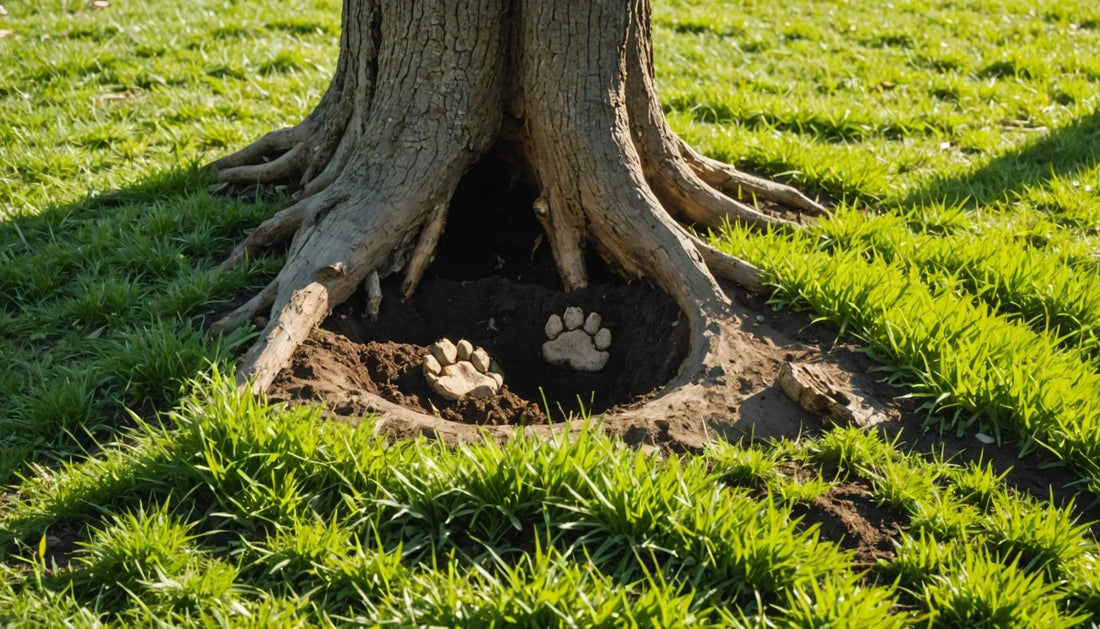
In the garden, unwanted holes can have various causes, from animals to natural processes. Rabbit mesh plays a key role in solving the problem of large holes in the garden, but before we jump straight to protective measures and smart fence ideas, let’s take a closer look at the real issue: A hole in a well-tended lawn, disturbed soil in the compost heap or a branching system near a tree stump – who is behind it? A robust metal lattice for the garden can be an excellent solution to prevent animals from entering. Gardeners are repeatedly faced with the intriguing challenge of accurately identifying the animal culprits behind unwanted digging and finding appropriate countermeasures. This article helps interpret the signs and presents clever, sustainable strategies for tackling the problem.
“Large holes in the garden are not only annoying, they can seriously damage the garden structure and your harvest.”
gartenjournal.net
Overview of the main animals responsible for large holes in the garden
In German gardens, a few animals are particularly busy as underground builders: Depending on soil conditions and food supply, different species feel at home in compost heaps, lawns or near trees. Their tracks and digging patterns provide essential clues for choosing the right approach.
The most common animals behind large holes
Who’s digging there? Three main suspects are always bursting out from underground: the rat, the badger and the rabbit. Raccoons, foxes or even moles sometimes join the party, but the focus is on those three specialists that create deep or extensive burrows. Their behavior changes depending on the surroundings:
- The rat: Seeks above all shelter and food scraps, and is therefore usually found around compost heaps, old wood piles or tree stumps. It leaves round, almost meticulously clean entrances in the ground, 6–12 cm wide and often with small droppings nearby.
- The badger: Leaves behind truly “ploughed up” patches of lawn while searching for grubs or other soil insects. The holes are shallow and can reach up to 30 cm in diameter – accompanied by large piles of soil and conspicuous scratch marks.
- The rabbit: Loves easily accessible, open areas, but prefers spots near tree stumps. It builds branching tunnel systems whose entrances are often oval and 10–15 cm in size. In spring and summer, there are usually several entrances and exits in the loose substrate.
Comparison table: Typical characteristics of the main burrowing animal species
| Animal | Hole diameter | Preferred location | Typical traces |
|---|---|---|---|
| Rat | 6–12 cm | Compost, garden shed, tree stump | Tracks, droppings, clean holes |
| Badger | 10–30 cm (shallow) | Lawn, tree roots | Mounds of excavated soil, large shallow depressions |
| Rabbits | 10–15 cm (oval) | Open areas, tree stumps | Several holes, tufts of fur, soft soil |
Accurately identifying the tracks – clues for correct attribution
Every hole tells a story:
Whether compost, lawn piece, or tree stump – analyzing the "crime scene" precisely is the first step to an accurate diagnosis. What matters? First and foremost, the location and shape of the hole, followed by diameter, depth, and accompanying traces provide crucial insights.
The position of the hole as the most important clue
A hole right in the middle of the compost points to rats; if it appears at an old tree stump, it could also be rabbits or a fox. On lawns with irregular, large depressions, badgers or raccoons are usually to blame.
The diameter and shape of the hole
It is often the combination of shape and size that reveals the culprit. Rats prefer tight, round entrances. Rabbits arrange their burrows in an oval shape; they sometimes appear a bit more furrowed or with soft, freshly dug soil in front of them.
Accompanying traces for confirmation
Droppings, scratch marks at the edge of the hole, or tufts of fur nearby make all the difference. Rat traces can be identified, for example, by fine, spindle-shaped droppings with a shiny surface. Rabbit visits are also indicated by conspicuous grass-and-hair nests in the lawn.
Comparison table: Types of tracks and likely culprits
| Track | Most common cause |
|---|---|
| Cleanly cut, round hole | Rat |
| Multiple exits, soft soil | Rabbits |
| Broad depressions, scratch marks | Badger, raccoon |
| Droppings, runways | Rat, fox |

The solution approach to minimizing and preventing large holes in the garden
Once the animal culprit has been clearly identified, you need smart, animal‑friendly methods. Depending on the cause, solutions range from simple barriers to sophisticated sounds or deterrent mechanisms.
Sabine, passionnée de jardinage, wondered one morning why new holes kept appearing in her vegetable bed. After several nights with a flashlight, she caught rabbits enjoying a nightly feast. A deeply buried rabbit mesh finally brought peace – vegetables and flowers continued to grow undisturbed.
Preventing rats and rabbits
When dealing with rats, the compost heap should be constantly monitored and kept as airtight as possible. No food scraps, no exposed fruit or bread! Mesh or rabbit wire can effectively block access – ideally, it should be buried slightly so that even enthusiastic diggers cannot simply slip underneath. For rabbits, installing fine wire fencing is a tried-and-tested method. The mesh size should be chosen so that nothing can get through – in any case, it is advisable to set the fences at least 30 cm deep into the ground.
Deterring and peacefully driving away badgers and raccoons
Deterring badgers? This actually works best with unfamiliar stimuli: motion-activated light sources such as solar lamps, wind chimes or ultrasonic devices can be remarkably effective. Raccoons can also be discouraged if you secure garbage cans and deliberately remove hiding places, making gardens less accessible.
Comparison table: Effective measures by animal type
| Animal | Most effective measures |
|---|---|
| Rat | Secure compost, block access, no food scraps |
| Rabbits | Fences, removal of hiding places, ground cover |
| Badger | Motion detectors, noise, fences with dig protection |
| Raccoon | Secure garbage bins, lighting, odor deterrents |
Smart summary and sustainable solutions
With a detective’s instinct, systematic tracking, and smartly chosen deterrent measures, you can prevent large holes in the garden in the long term. The most important takeaways:
- Examine tracks closely: only if you clearly identify the culprit can you take targeted action!
- Keep compost tightly contained, turn it regularly and add only plant-based waste.
- Rabbit protection with sturdy, deeply buried rabbit mesh in all vulnerable areas.
- Do not leave open food sources in the garden or shed – they attract rats and raccoons like magic.
- Make vulnerable lawn areas unattractive to nocturnal visitors with motion-controlled light, noise or odour removal.
- Regularly check old tree stumps and remove them if necessary.
Whether compost heap, lawn or tree stump: with a few tailor-made tricks and continuous feedback from your own observations, your garden will once again flourish from the ground up without nasty surprises.
“The most effective method against unwanted diggers remains a combination of prevention, detective work and protective mechanisms such as sturdy rabbit wire.”
mein-schoener-garten.de
Anyone who reads the signs and takes targeted action will be rewarded with a healthy, intact garden. With a bit of luck, large holes will then be a thing of the past for good.