
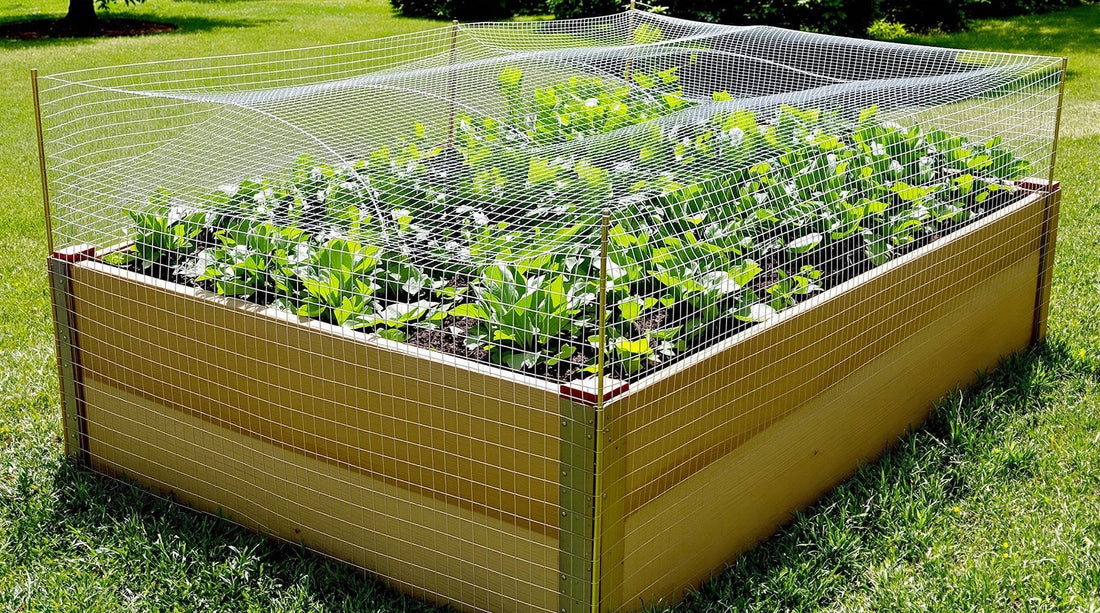
Optimal protection: Requirements for wire mesh in raised beds
A raised bed only becomes truly secure with a cleverly installed rabbit wire mesh at the base or along the side walls. But which mesh size reliably prevents pests such as voles, moles or other rodents from getting in? Many hobby gardeners deliberately opt for a vole mesh for raised beds, as it is specifically designed to protect delicate plant roots permanently from feeding damage. Why does the material itself play such a key role in durability? In this article, we’ll look at all the facts so that your plants can thrive in the best possible way and you can enjoy your raised bed for a long time to come.
Gardeners know the problem: Successfully built raised beds attract not only people but also animal visitors like a magnet. Voles and moles in particular exploit every weakness underground. They penetrate through mesh that is too coarse, damage roots, or even destroy entire crops. Even hobby gardeners with a small city garden can face these issues, no matter how solidly the bed is built.
“A fine-mesh wire netting is the most effective protection against voles in raised beds.” (Gartenjournal.net)
Depiction of typical dangers for raised beds
- Voles: Destroy vegetable plants from below, eat roots and undermine the bed.
- Moles: Relentlessly burrow under beds, throw up mounds and loosen the soil.
- Rodents (such as rats, mice): Gnaw on roots and stunt the growth of many plants.
- Other pests: Crawl through coarse mesh and use the raised bed as a food source.
The right wire mesh both prevents these hazards and protects the often delicate roots of cultivated plants. Reliable protection therefore begins with choosing the right material and the correct mesh size.
The role of the grid in plant and root protection
A sturdy mesh at the bottom of the raised bed provides multi-year protection and not only keeps animals out but also prevents the soil from potentially sinking. At the same time, sufficient water can still reach the bed and natural ventilation is maintained.
Bear in mind that even highly specialized voles can exploit gaps of just a few millimeters. Therefore, not only the material but above all the mesh size must be chosen with precision.
The most important requirements for a protective grille
So what does a reliable wire mesh need to deliver? The following points are crucial:
Last spring I, Julia, lined the entire raised bed with simple chicken wire. After just a few months, voles still dug their way through and ate everything. Only when I switched to fine-mesh, spot-welded stainless steel did my radishes and carrots finally remain untouched and the bed stayed protected for good.
- Protection against rodents: A mesh size as small as possible prevents them from squeezing through.
- Robust and durable: Wire thickness influences stability and resistance.
- Weather-resistant: The material must be protected against moisture and rust (e.g. galvanised or stainless steel).
- Easy to install: A flexible yet robust mesh allows for a precise fit.
Comparison table: Hazards and suitable mesh sizes
| Risk | Recommended mesh size | Justification |
|---|---|---|
| Voles | max. 10 mm | Small bodies, can fit through larger gaps |
| Moles | max. 13 mm | Body larger, but powerful digger |
| Mice/rats | max. 13 mm | Can squeeze through and gnaw |
| Roman snails or similar | up to 13 mm | Generally no urgent need for protection at ground level |
Comparison table: common materials and their weather resistance
| Material | Eigenschaften | Weather resistance |
|---|---|---|
| Verzinkter Stahl | Corrosion-protected, flexible, inexpensive | Gut |
| Stainless steel (V2A/V4A) | Very durable, rust-free, robust | Sehr gut |
| Untreated steel | Inexpensive, but corrodes quickly | Poor |
| Plastic-coated | Additional protection, but often less stable | Mittel |

The key criteria: Suitable mesh size and wire quality
Choosing the right wire mesh is not a trial-and-error task! Especially when protecting against voles, the correct mesh size is crucial. The smaller the opening, the better – but ventilation must not be neglected either.
The optimal mesh size for protection against voles and similar pests
Studies recommend a mesh size of at least 6 mm and a maximum of 13 mm. Anything larger provides small rodents with a nesting place, anything smaller may constrict the roots of sensitive vegetables with vigorous root growth.
Recommended values: 6 mm to a maximum of 13 mm
For most beds, experts recommend a mesh size of between 6 mm and 10 mm. Rabbit wire with 13 mm is sufficient at less problematic sites and with stronger wire, for example for mole protection.
| Mesh size | Protective effect | Recommended use |
|---|---|---|
| 6 mm | Optimal against voles | Raised beds with sensitive roots |
| 10 mm | Very effective against voles, well ventilated | Raised beds in home and allotment gardens |
| 13 mm | Effective against larger pests | Beds with less rodent damage |
| 16 mm and above | Only mole protection, unsuitable for voles | Greenhouse floor, larger areas |
The influence of wire thickness on durability and resistance
Wire thickness determines service life: experts recommend a wire diameter of at least 0.8 mm (1 mm is even better). Thinner wires give way more quickly under mechanical stress; thicker versions are harder to install, but withstand vole teeth for much longer.
Processing: galvanised, spot-welded, stainless steel – advantages at a glance
- Zinc-plated: Protects against rust, is inexpensive and available at DIY stores.
- Spot-welded: Increases stability, prevents the mesh from being pulled apart.
- Stainless steel (V2A or V4A): Rust-free, extremely durable, ideal for permanently damp locations.
Comparison table: overview of available wire mesh products for raised beds
| Product | Mesh size | Wire thickness | Material | Eigenschaften |
|---|---|---|---|---|
| Vole mesh 10 mm | 10 mm | 1 mm | Verzinkter Stahl | Classic, flexible, good long-term effect |
| Stainless steel mesh 6 mm | 6 mm | 0.8 mm | Stainless steel (V2A) | Premium, rust-free, for long-term use |
| Rabbit mesh 13 mm | 13 mm | 1 mm | Verzinkter Stahl | Inexpensive, suitable for large beds |
| Spot-welded wire mesh | 6–10 mm | 1 mm | Galvanised or stainless steel | Very sturdy, difficult to deform |
The right mesh: recommendations for selection, installation and maintenance
Choosing suitable types of wire mesh for different raised beds
Beds differ in height, construction and location. For shady or particularly damp sites, stainless steel is always recommended; standard locations benefit from galvanised mesh. Especially for taller beds with a large volume, you should opt for spot-welded products. For herb or mini raised beds, classic rabbit mesh with a 13 mm mesh size is often sufficient, provided there is little rodent activity at the site.
What to look out for with rabbit wire, aviary mesh and special vole mesh
- Rabbit wire: Inexpensive, available in large rolls, should have a tighter mesh size (max. 13 mm) and strong galvanization.
- Aviary wire: Available in particularly fine mesh, for the highest demands and small raised beds.
- Vole mesh: Usually with 6 mm or 10 mm mesh size, high-quality workmanship and ideal for sensitive crops.
Installing the protective grille: practical tips for safe fitting
The mesh should line the entire base of the bed, with the edges pulled up at least 10 centimetres along the sides and fitting snugly. Overlaps and joints can be connected with stainless steel wire or rust‑free clips. On solid sub‑bases, it is also advisable to add a little sand to help plant roots grow through.
Regular maintenance: preventing rust and preserving stability
Inspect the wire mesh once a year for rust spots or bent meshes. You can protect galvanised wire from corrosion by spraying exposed cut edges with zinc spray after installation. Leaves and humus should be removed regularly to prevent standing moisture from forming.
Comparison table: Types of wire mesh and their suitability for different raised‑bed designs
| Type of mesh | Suitability | Mesh size | Recommended use |
|---|---|---|---|
| Galvanized rabbit wire | Medium to good | 13 mm | Standard raised beds without severe infestation |
| Galvanized aviary wire | Sehr gut | 6–10 mm | Small beds, big expectations |
| Stainless steel mesh | Excellent | 6–10 mm | Damp locations, high durability requirements |
| Spot-welded wire mesh | Sehr gut | 6–13 mm | Large raised beds |
| Standard chicken wire mesh | Sufficient | 16 mm | Only suitable against moles |
Comparison table: Effort and costs for installation and maintenance of different wire meshes
| Product type | Installation effort | Cost per m² | Maintenance effort |
|---|---|---|---|
| Galvanized rabbit wire | Gering | 3–5 euros | Low (re-inspection recommended) |
| Aviary wire/stainless steel | Mittel | 15–30 euros | Very low (virtually maintenance‑free) |
| Spot-welded wire mesh | Mittel bis hoch | 10–15 euros | Low (long service life) |
| Chicken wire | Gering | 2–3 euros | High (prone to rust and repairs) |
Choosing the optimal wire mesh for a raised bed should never be left to chance. Fine-mesh options made from galvanized steel or, for the highest standards, stainless steel, offer the most reliable protection against voles and other soil pests. A mesh size of 6 to a maximum of 13 mm provides sustainable protection without negatively affecting ventilation or root growth. Investing in high-quality, spot-welded, or rust-free materials pays off in the long run, as maintenance and replacement are significantly reduced. This way, the raised bed can remain a productive oasis in your garden year after year.