
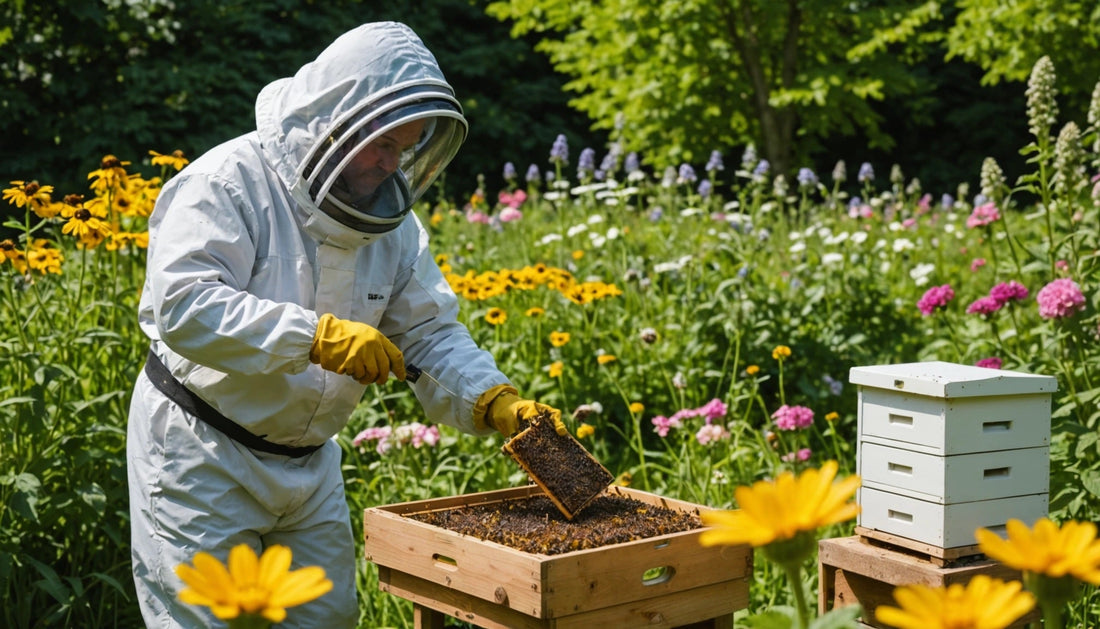
Varroa mite: The invisible enemy in the beehive
Origin and distribution
The Varroa mite, scientifically known as Varroa destructor, is a parasite that infiltrates beehives and represents one of the greatest threats to beekeeping worldwide. The mite originally comes from Asia, where it coexists with the Asian honey bee Apis cerana. However, it has now spread almost everywhere after jumping to the Western honey bee Apis mellifera. Its adaptation to the Western honey bee has created a global problem, as this species has not developed the same natural defense strategies against the mite as Apis cerana has.
Damage to bees and the garden
A severe infestation with Varroa mites can have devastating effects on bee colonies. The mites live on bee larvae and adult bees, sucking out their body fluids and weakening their immune system. Even more worrying is that the mites can transmit viruses such as Deformed Wing Virus (DWV), which leads to deformed wings and ultimately the death of the bee. These threats severely impair the bees’ ability to fulfil their role as important pollinators in our gardens. The impact on the garden can be dramatic, as pollination performance declines, ultimately threatening biodiversity and food production.
Traditional control methods: Where are the limits?
Traditional methods for combating the Varroa mite, such as the use of chemical acaricides, have shown some success but are not without drawbacks. Chemical residues can accumulate in honey and beeswax, potentially harmful to humans and the environment. Additionally, there is a risk that mites develop resistance to these chemicals, reducing the effectiveness of these practices. Mechanical measures like drone brood removal and the use of Varroa grids are also common methods, but they require significant labor and have limitations in feasibility, especially with large bee colonies.
Creative approaches to combating the Varroa mite
Technological innovations
The use of technological innovations offers a promising way to combat the Varroa mite without resorting to harmful chemicals. Heat treatments, such as those used in devices like the Varroa heat treatment unit, kill the mites effectively by raising the temperature of the hive to a level that is harmless to the bees themselves but lethal to the mites. Such technological solutions make it possible to reduce infestation without disrupting the bees’ natural life cycle.
Efficient tools: Varroa screens and propolis screens
Efficient mechanical aids such as Varroa screens offer a practical solution for physically reducing the mite population in the hive. These screens prevent the mites from returning to the brood nest once they have fallen off. Propolis screens, on the other hand, have a dual benefit: they not only optimize the spatial layout inside the hive, but also promote the production of propolis, which is known for its antimicrobial properties and thus naturally contributes to keeping the bees healthy. Installing these screens is relatively simple and requires little maintenance. Discover a selection of propolis screens for your beekeeping operation.
Natural alternatives and strategies
In addition to technology, natural approaches are also coming into focus in the fight against the Varroa mite. Essential oils such as thymol, eucalyptus and citronellol have proven to be effective agents for repelling or killing mites. These oils leave no chemical residues and at the same time support the health of the bees. Strategies based on strengthening the bees’ natural resilience are also of the utmost importance. A diverse range of blossoms in the garden or surrounding area can boost the bees’ immune and digestive systems and thus increase their overall resistance to stress and disease.
Combined methods
Each of the mentioned approaches has its pros and cons, but real success is shown when they are combined. Integrating mechanical, technological, and natural methods can lead to a multifaceted defense system against mites. Many beekeepers have found that such integrated pest management is more sustainable and effective in the long run. For example, heat treatment can be used to reduce acute cases of mites, while Varroa grids and natural remedies support long-term control.
Metal Market: Innovative solutions for beekeepers and garden enthusiasts
Metal Market is a manufacturer specializing in the supply of high-quality metal products for beekeepers and gardeners. The company’s products are not only durable and robust, but also designed with sustainability in mind, making them ideal tools for modern beekeeping.
- A particular focus at Metal Market is the development of efficient and practical solutions for varroa control. These include specialized varroa and propolis screens, which are designed with sophisticated engineering and well-thought-out functionalities to ensure maximum efficiency. These products are built for longevity and effectively support beekeepers in their daily work.
- Additionally, Metal Market offers advanced technology products, including precise heat treatment devices and innovative monitoring systems. These help beekeepers keep a continuous eye on their bee colonies and respond early to issues. This not only strengthens the health of the bee colonies but also improves the overall performance of the beekeeper.
- With a strong focus on customer loyalty and support, Metal Market provides its customers not only with products but also with excellent service, including comprehensive advice and assistance from experienced professionals. This commitment is reflected in customer satisfaction and drives the continued development of innovative and sustainable solutions.
Tips for beekeepers: Successfully combating varroa mites and protecting gardens
Prevention is key
One of the most effective strategies in the fight against the Varroa mite is prevention. Early monitoring and regular inspection of bee colonies are essential to detect and combat an infestation early. The use of Varroa and propolis grids should be implemented as a standard measure in every beekeeping operation.
Regular care and hygiene
Cleanliness in the apiary is crucial for bee health. Regular cleaning of the hives, removal of old combs and replacement of soiled components help reduce the risk of infections and parasites. Rapid feeding also ensures that the bees are well supplied with resources, which increases their resistance to stress factors.
4.3. Long-term strategies
Sustainable control of the Varroa mite can only be achieved through long-term strategies and the promotion of strong biodiversity. Create gardens with a variety of flowering plants that offer nectar and pollen at different times of the year. This improves the living conditions for all pollinators and reduces the bees' dependence on a single food source.
Cooperation with other beekeepers and local organizations also offers the opportunity to share experiences, learn from one another and undertake joint efforts in the fight against the Varroa mite. Strengthening community resources improves adaptability and resilience to health challenges.
Together against the Varroa mite
Today it is of utmost importance that we strive to protect our environment and safeguard the health of our pollinators. By using creative and sustainable approaches to combat the Varroa mite, we can not only protect bee health, but also preserve the diversity of our gardens and cultivated landscapes. Metal Market offers innovative solutions that meet modern requirements and provide practical tools for both beekeepers and garden enthusiasts. Visit Metal Market to discover the products that are right for you and help ensure the health of our vital pollinators.