
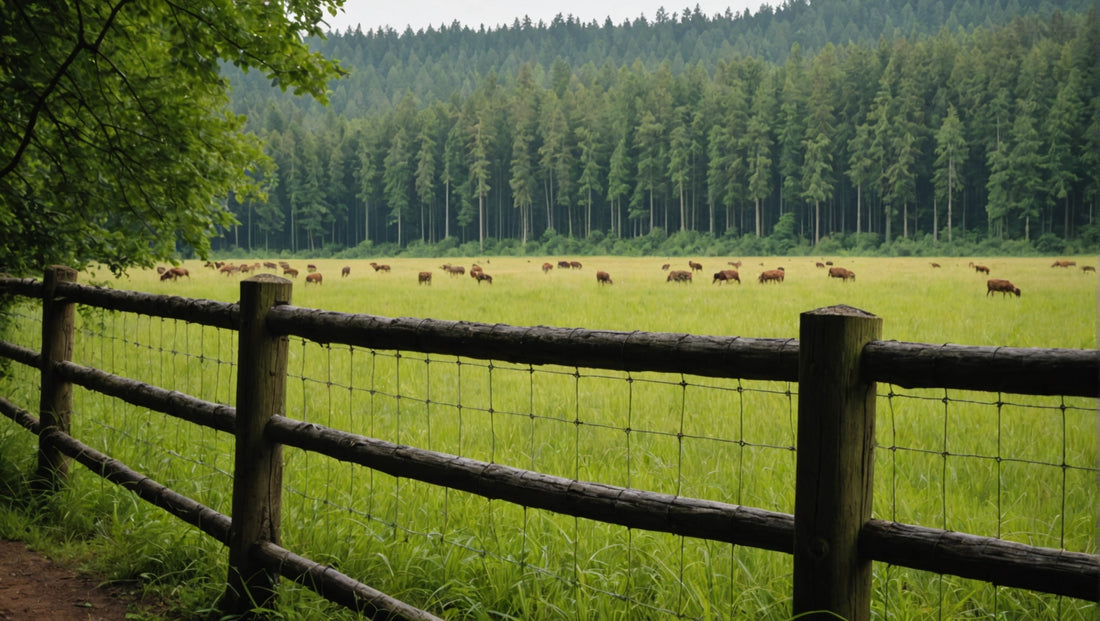
Definition and significance of wildlife protection
Wildlife protection includes all measures aimed at keeping wild animals away from certain areas or controlling their movements. This is particularly important in agricultural areas where wild animals can destroy crops. But wildlife protection also plays a crucial role in private gardens and nature reserves, helping to preserve certain plant species and maintain ecological balance. In addition, wildlife protection promotes safety. In urban areas, it helps to avoid inevitable conflicts between humans and wild animals.
Objectives and benefits of a wildlife protection fence
A wildlife fence is designed to prevent wild animals from entering areas where they could cause damage. The main objectives of a wildlife fence include:
- Protecting crops from damage caused by wildlife
- Protection of young plants in gardens and forests
- Preventing wildlife collisions on roads
- Preservation of ecological balance by protecting sensitive plant species
- Reducing the transmission of diseases spread by wild animals
- Preventing overpopulation of certain wildlife species in sensitive habitats
With an effective fencing solution, farmers can secure their yields and private garden owners can protect their plants without harming the animals. In addition, a well-designed wildlife fence creates peaceful coexistence between humans and wild animals.
Factors that influence the height of a wildlife fence
Wildlife population and behavior
When planning a wildlife fence, you must take the local wildlife population and their behaviour into account. Which animals are native to the region? How high can they jump? Smaller animals such as hares can overcome low obstacles, while larger animals such as deer are capable of incredible jumps. Their feeding behaviour is also important: animals that graze or dig require fences with additional measures such as underground barriers.
Geographical and climatic conditions
Geography and climate also influence fence height. In hilly areas, animals may easily jump over a fence if it is positioned on a slope. In addition, weather conditions such as snow depth in winter can affect a fence’s effectiveness. A fence that works well in summer may become useless in winter due to drifting snow. Also consider site-specific conditions such as soil composition and vegetation.
Agricultural and ecological factors
In agricultural areas, ecological factors also play a role. The protection of plant varieties and the preservation of biodiversity are important. At the same time, care must be taken to ensure that fences do not become an obstacle for other animal species that are important to the ecosystem. Some animals play a key role in pollination or as natural pest controllers. Excessive separation could disrupt the ecological balance.
Recommended fence heights for common wildlife species
- Small wild animals (hares, rabbits): For smaller wild animals such as hares and rabbits, it is advisable to erect a fence at least 50 cm high. In addition, the lower section of the fence should have a narrow mesh to prevent the animals from digging under or squeezing through. An additional barrier such as a small underground net can prevent burrowing.
- Medium-sized wild animals (deer, foxes): Medium-sized wildlife such as deer and foxes require higher fences to be effectively deterred. A fence height of 1.5 to 2 meters is usually sufficient. Deer are known for their jumping ability, which is why a sufficiently high and stable fence is necessary. Because of foxes, also consider measures against digging, as foxes are talented diggers.
- Large wild animals (deer, wild boar): For large wild animals such as deer and wild boar, specific requirements must be observed. To keep deer out, you need fences at least 2.5 meters high. Wild boar, on the other hand, are strong and capable diggers, so the fence should not only be high but also buried deep into the ground. An electric barrier can provide additional protection.
Comparison of different fence types
Traditional fences: wood, metal, chain-link
Traditional fences such as wooden or metal fences and chain‑link fences provide a solid physical barrier. They are sturdy and durable. However, they can be costly and difficult to install. Wood is also prone to rot, especially in damp areas. Metal fences can be expensive and difficult to handle, but they offer a long service life. Chain‑link fences are flexible and more affordable, but may not be quite as robust. An especially strong and durable option is welded metal mesh, which provides a stable and resilient solution.
Modern solutions: electric fences, invisible fences
Electric fences and invisible fences offer modern alternatives. Electric fences deliver mild electric shocks that deter animals without causing serious harm. Invisible fences based on GPS technology are another innovative solution that can be particularly effective in heavily wooded or difficult terrain. However, these fences require continuous power sources and regular maintenance to ensure their effectiveness. Electric fences should be installed and maintained by experienced individuals to ensure they function properly.
Construction and installation: Practical instructions
When building and installing the fence, make sure it is firmly anchored in the ground and that there are no gaps through which animals could slip. When installing electric fences, it is important to use the correct voltage settings to deter animals effectively without harming them. Also observe the safety aspects and regulations for installing electrical components.
Successful implementation and maintenance
Planning and design: Key considerations and tips
The successful implementation of a wildlife protection fence begins with careful planning. Take into account the specific requirements of the animals you want to deter as well as the particular features of the terrain. Pay attention to sturdy materials and an appropriate height in line with the wildlife species in your region. If you are looking for a durable and stable material, you should consider wire mesh, which is an excellent option. Choose additional materials or techniques to address specific challenges, such as strong diggers or animals that chew through barriers. (
Construction and installation: Practical guidance
When building and installing the fence, you should ensure that it is firmly anchored in the ground and that there are no gaps through which animals could slip. When installing electric fences, it is important to use the correct voltage settings to repel animals effectively without harming them. Also observe the safety aspects and regulations for installing electrical components.
Maintenance and inspection: Strategies to ensure effectiveness
Regular maintenance of the fence is crucial for its long-term effectiveness. Check the fence regularly for damage and repair it immediately. For electric fences, continuous monitoring of voltage and the power source is required. Be prepared for natural forces such as strong winds or storms that could damage your fence, and keep an emergency kit on hand for quick repairs.
Summary and conclusion
A well-planned and properly installed wildlife fence is an effective way to keep wild animals away from your garden or agricultural land. The choice of the right fence height and suitable material depends on various factors, including the type of wildlife, the terrain, and climatic conditions. Traditional fences offer robust solutions, while modern electric fences and invisible fences provide flexible alternatives.
Successfully installing a wildlife protection fence requires careful planning and regular maintenance. By taking specific needs into account, you can protect your plants and crops.