
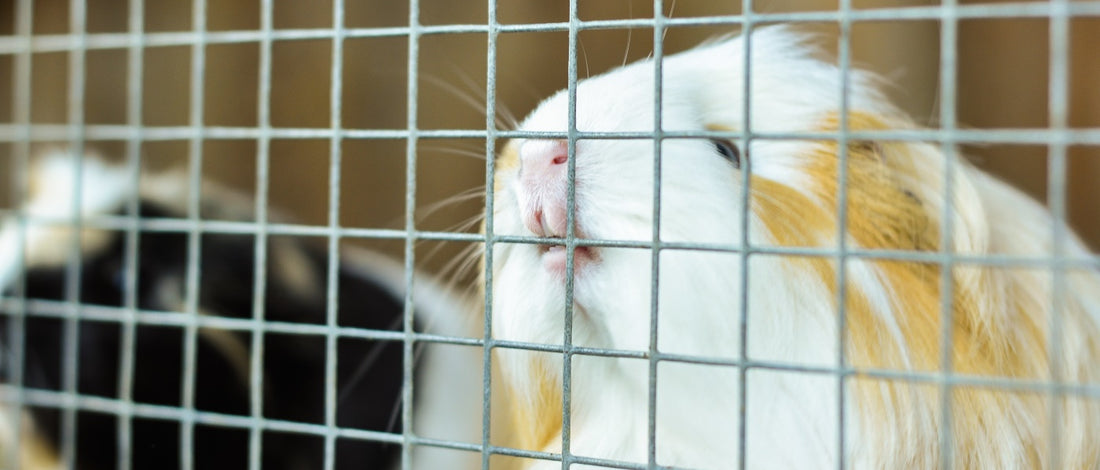
Choosing the right mesh size for wire mesh in animal enclosures is crucial, as it affects the safety, comfort, and well-being of the animals. Here is a detailed look at various types of animal enclosures:
- Small animal hutches (rabbits, guinea pigs, etc.):
Small animal hutches generally require wire mesh with a relatively small mesh size, typically around 12 mm. This narrow mesh prevents the animals from escaping or sticking their heads through. Rabbits and guinea pigs, for example, are capable of squeezing through very small openings, so it is important to choose a mesh size that is small enough to prevent this. In addition, a close-meshed structure protects against predators such as martens or rats, which can pose a threat to these small animals.
Like this one here, for example.
- Poultry houses (chickens, ducks, etc.):
Poultry houses require wire mesh with a larger mesh size than small animal enclosures, typically around 20 mm (1 inch). These larger mesh sizes allow good ventilation and light penetration in the coop, which is important to ensure optimal conditions for keeping poultry. At the same time, however, the mesh must be small enough to prevent predators such as foxes or birds of prey from entering. The birds should not be able to stick their heads through the mesh, as this could cause injuries or lead to them getting trapped.
Like this one here, for example.
- Small-animal enclosures (rabbits, chickens, etc.):
Small‑animal enclosures that house a variety of animals often require a medium mesh size of around 22 mm (1 inch). This mesh size provides a balanced level of protection against animals escaping and predators entering. It allows adequate ventilation and light transmission in the enclosure while ensuring a safe environment for the animals.
Just like this here for example.
- Large animal housing (sheep, goats, etc.):
Large animal stalls typically require wire meshes with a larger mesh size, usually between 50.8 mm to 101.6 mm (2 to 4 inches). These larger mesh sizes allow animals to stick their heads through to access food while providing sufficient security to keep the animals in the stall. Ventilation and air circulation are also important for large animals, and the larger mesh sizes help maintain good air quality in the stall.
The exact choice of mesh size depends on various factors, including the type and size of the animals being kept, the surroundings of the stall or enclosure, and the specific requirements of the animal keeper. It is advisable to seek professional advice before purchasing wire mesh for animal housing to ensure that the chosen mesh size meets the animals’ needs while also guaranteeing their safety.